
Learning Platform Landscape In 2026—Infographic
The learning technology ecosystem continues to evolve, but the AI Expectation Gap in Learning Tech 2026 report shows that organizations and vendors are not always moving at the same pace. Based on feedback from more than 500 L&D professionals and learning technology vendors, the research reveals which platforms organizations rely on today, where vendors are investing, and how the market is likely to develop over the next few years.
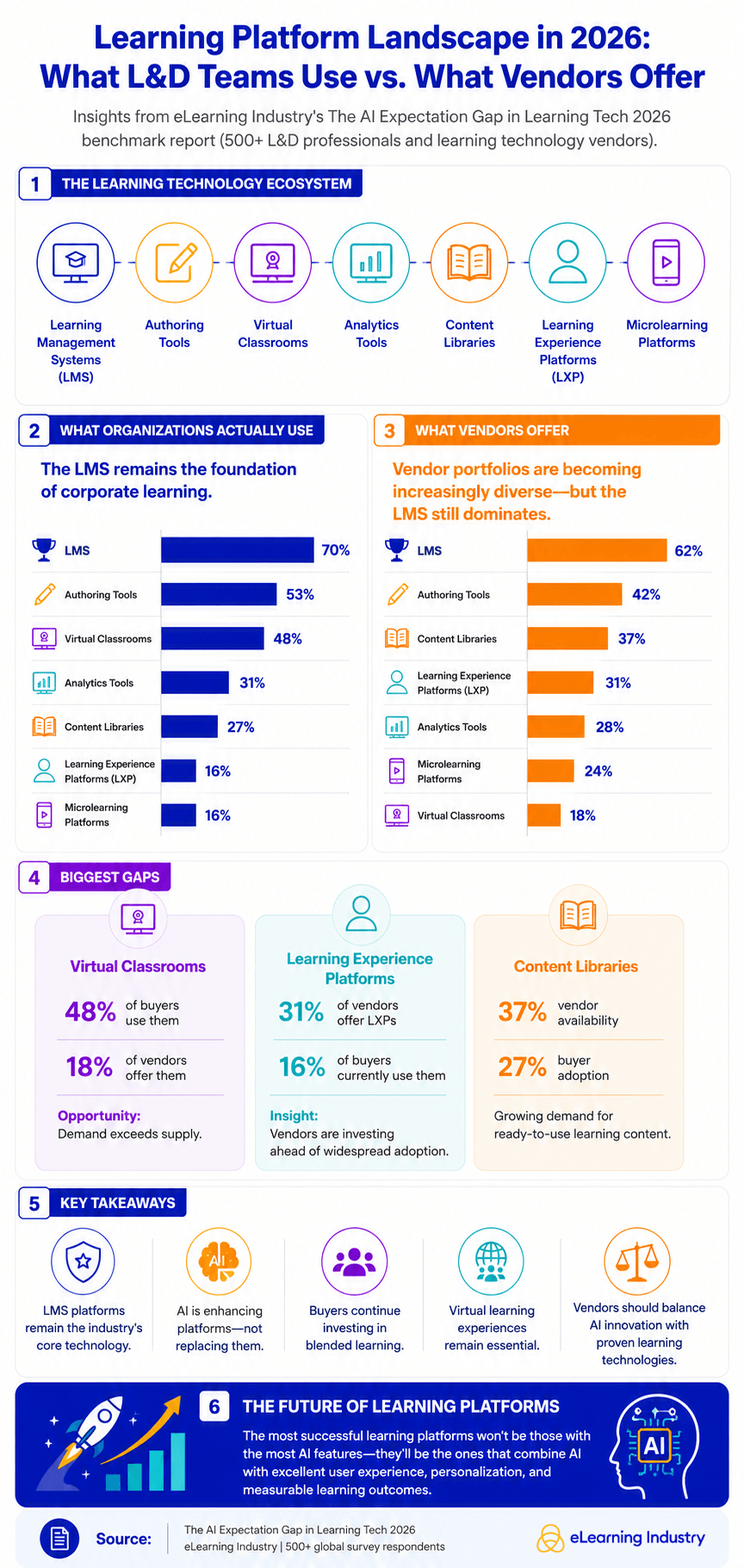
The findings confirm that the Learning Management System (LMS) remains the foundation of corporate learning. Seventy percent of L&D buyers report using an LMS, making it the most widely adopted learning technology by a significant margin. Authoring tools (53%) and virtual classrooms (48%) are also widely used, reflecting the continued importance of blended learning, instructor-led training, and collaborative learning experiences. While AI is transforming learning technology, the report makes it clear that organizations are enhancing existing ecosystems rather than replacing them.
Vendor priorities, however, reveal a broader technology strategy. While 62% of vendors offer LMS platforms, many are expanding into newer categories such as content libraries (37%), Learning Experience Platforms (31%), and microlearning platforms (24%). This suggests vendors are preparing for future demand even though adoption remains relatively low. For example, only 16% of organizations currently use an LXP, despite nearly one-third of vendors offering one.
The report also highlights several important market gaps. Virtual classrooms demonstrate the largest imbalance, with 48% of buyers using them compared to only 18% of vendors offering them. This indicates that live, instructor-led learning remains an essential component of modern learning strategies, despite growing attention on AI-powered self-paced experiences. Similarly, demand for curated content libraries continues to grow as organizations seek ready-to-use learning resources that accelerate workforce development.
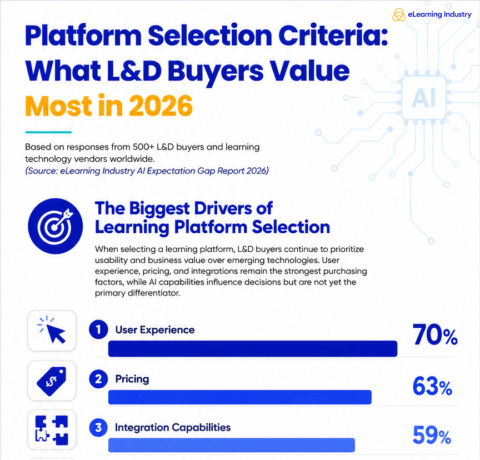
Ultimately, the report concludes that the future of learning platforms will not be defined by AI features alone. Buyers continue to prioritize user experience, personalization, seamless integrations, measurable business outcomes, and trust when evaluating learning technology. The vendors most likely to succeed will be those that balance AI innovation with proven learning technologies, creating platforms that improve learner engagement, simplify administration, and deliver measurable organizational impact.


You can adjust your cookie preferences here.