
6 Statistics That Define The Learning Technology Market—Infographic
The learning technology market is entering a new phase of AI adoption, but the latest AI Expectation Gap in Learning Tech 2026 report shows that innovation is not yet aligned with buyer priorities. Based on insights from more than 500 Learning and Development (L&D) professionals and learning technology vendors, the research highlights both the opportunities and the disconnects shaping the industry.
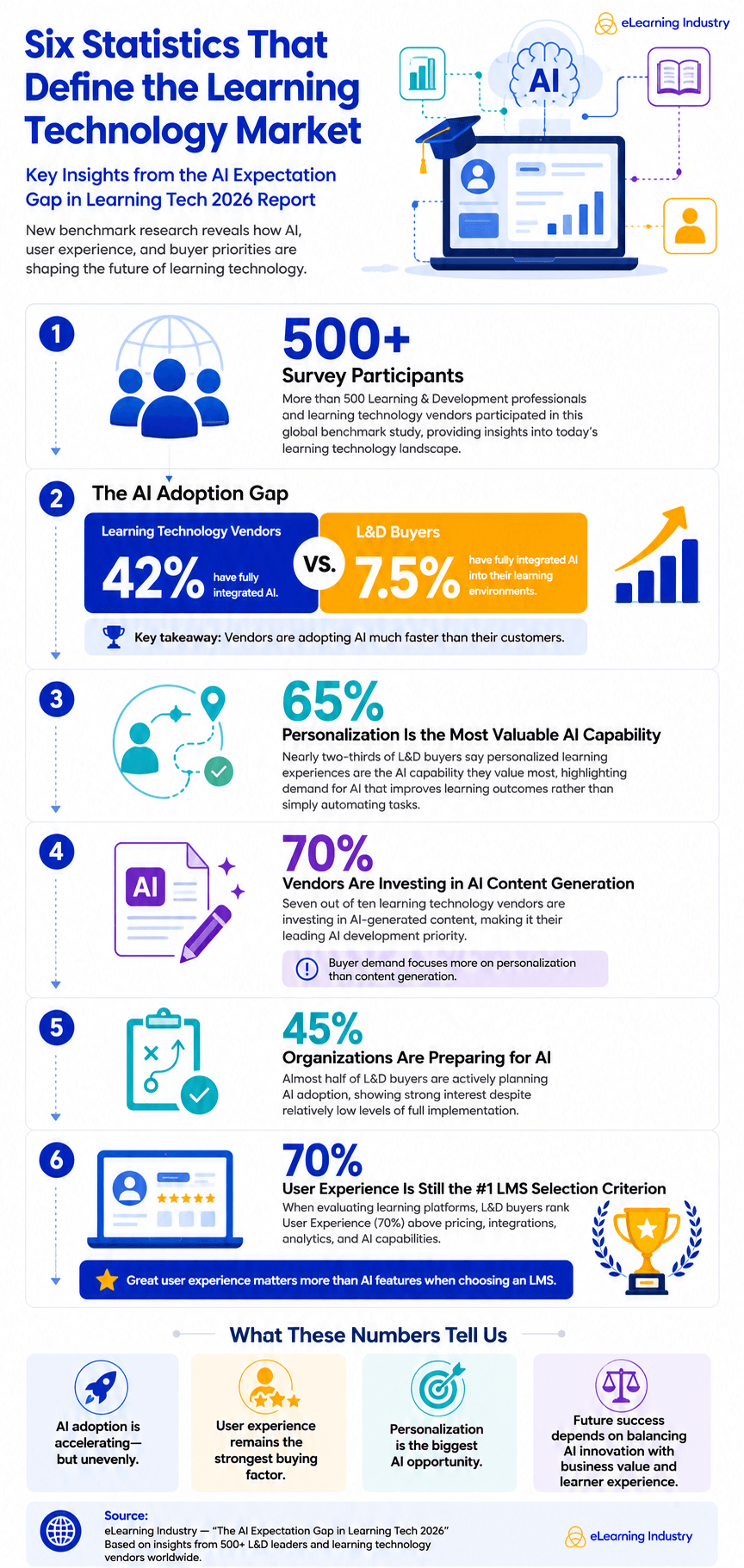
One of the most striking findings is the AI adoption gap. While 42% of learning technology vendors report that they have fully integrated AI into their platforms, only 7.5% of L&D buyers say AI is fully implemented within their organizations. However, the market is clearly moving forward, with 45% of organizations actively preparing for AI adoption, indicating that widespread implementation is likely to accelerate over the next few years.
The report also reveals that buyers are looking beyond automation. 65% of respondents identified personalized learning experiences as the most valuable AI capability, demonstrating that organizations want AI to improve learner engagement, skill development, and performance rather than simply generate content. This finding contrasts with vendor priorities, as 70% of learning technology providers are currently investing heavily in AI-powered content generation. The research suggests that vendors who shift their focus toward adaptive learning, intelligent recommendations, and individualized learning pathways will be better positioned to meet customer expectations.
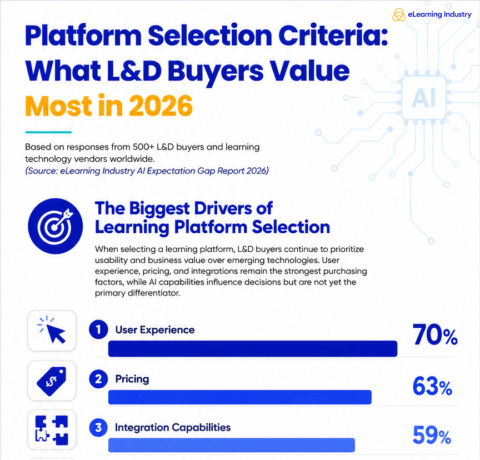
Another important insight is that user experience remains the leading purchasing factor. 70% of L&D buyers rank user experience above pricing, integrations, analytics, and even AI capabilities when selecting a learning management system (LMS). This reinforces the report's message that AI alone is not enough—buyers expect intuitive, seamless platforms that make learning easier and more engaging. Organizations are increasingly evaluating AI as an enhancement to the learner experience rather than a standalone feature.
Overall, the report concludes that the future of learning technology will be defined by balancing AI innovation with real business value. Vendors that prioritize personalization, usability, and measurable learning outcomes, while helping customers close the implementation gap, are likely to emerge as market leaders in the next generation of AI-powered learning platforms.


You can adjust your cookie preferences here.