
The 3 Levels Of Thinking And How To Design For Them—Infographic
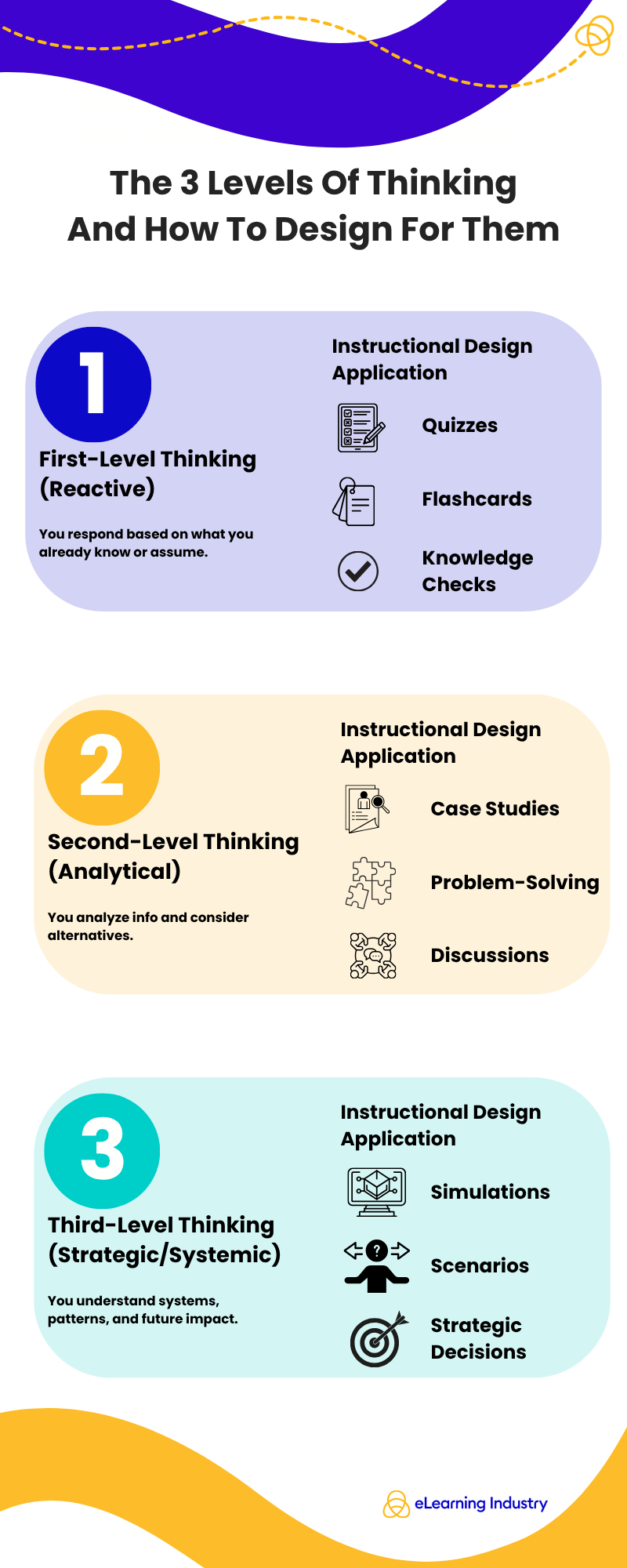
Understanding the 3 levels of thinking helps Instructional Designers move beyond content delivery and design for real cognitive impact. These levels show how deeply learners think about information, ranging from quick reactions to thoughtful, long-term reasoning.
1. First-Level Thinking (Reactive Thinking)
First-level thinking is fast and automatic. It relies on past experiences, assumptions, and familiar patterns. Learners at this level focus on immediate answers rather than deeper understanding. In the workplace, this shows up in quick decisions made under pressure. For example, people may choose a familiar solution without considering whether it still works for the situation. While this can be helpful for speed, it usually limits creativity and critical thinking.
2. Second-Level Thinking (Analytical Thinking)
Second-level thinking goes deeper. It involves evaluating alternatives, weighing consequences, and questioning initial assumptions. This level aligns closely with types of critical thinking used in problem-solving and decision-making. For instance, during strategic planning, a learner considers multiple scenarios before choosing a direction. In risk assessment, they analyze potential outcomes instead of reacting to the most obvious option. This level supports better, more informed decisions.
3. Third-Level Thinking (Systemic / Strategic Thinking)
Third-level thinking is the most advanced type of thinking. It looks at the long-term impact of decisions and how they connect to different systems. Learners think about how their choices affect various stakeholders and future outcomes. This kind of thinking is common among leaders, as it is important for managing complex situations. For example, in organizational change, it helps teams see how a single decision can create ripple effects across departments, not just the immediate results.


You can adjust your cookie preferences here.