
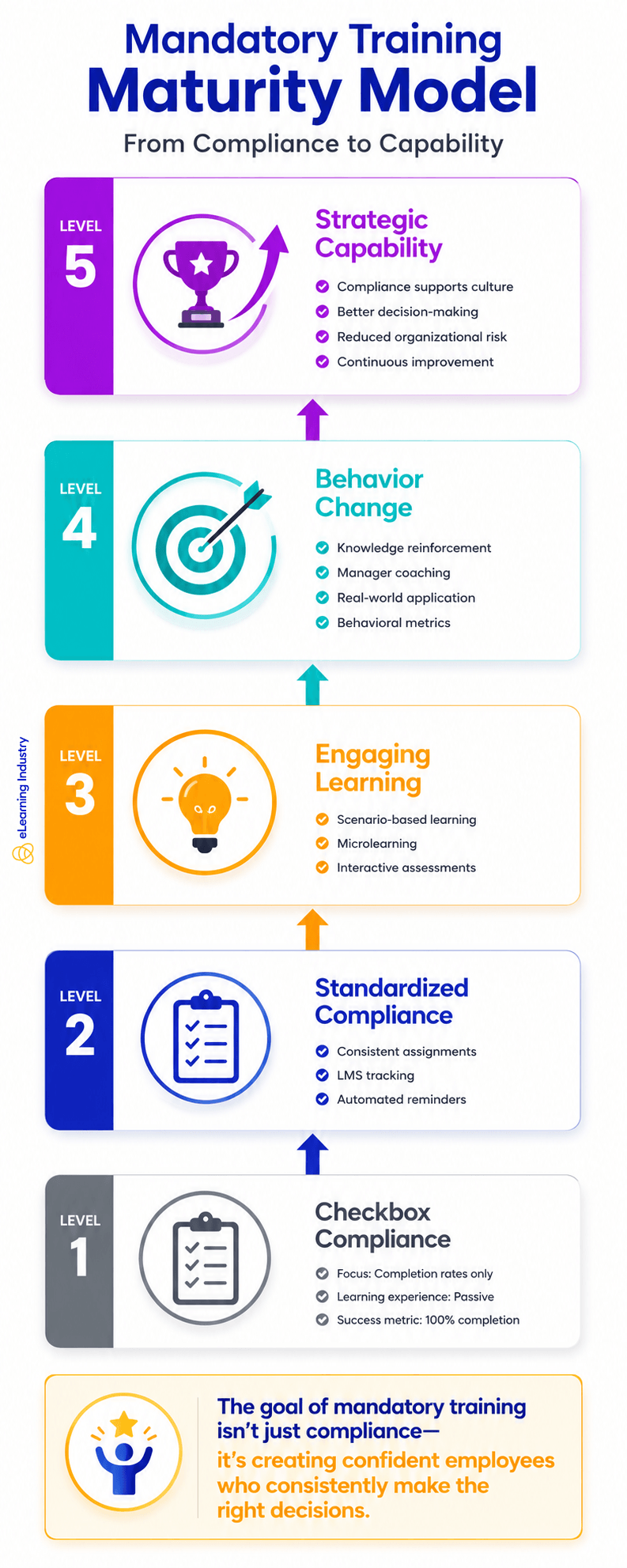
Mandatory Training Levels: From Compliance To Capability—Infographic
Mandatory training works best when it focuses on the specific risks an organization wants to avoid, rather than just checking off regulations. Although legal requirements vary by industry and location, most organizations have similar responsibilities for employee safety, ethical behavior, data protection, and keeping operations running smoothly. Knowing these areas helps L&D professionals choose learning programs that lower risk and support business goals.
Mandatory Compliance Training
Most workplace learning programs begin with mandatory compliance training. This training helps employees learn the laws, rules, and company policies that guide their work. It also reduces the risk of legal issues or unethical behavior.
Common topics are codes of conduct, anti-harassment and anti-discrimination, business ethics, data privacy, anti-bribery, and conflicts of interest. Instead of asking employees to memorize policies, good compliance training uses real-life examples to show how everyday decisions can have legal, financial, or reputational effects. This helps employees see not just what the rules are, but why they matter.
Workplace Health And Safety Training
Health and safety training keeps employees safe and helps organizations maintain a productive workplace. While requirements differ by workplace, many organizations offer training on OSHA standards, emergency response, personal protective equipment (PPE), hazard communication, ergonomics, and incident reporting.
The goal is more than just meeting regulations. Employees should be able to spot hazards, act correctly in emergencies, and use safe work habits every day. For L&D teams, this means designing training that builds practical decision-making skills, not just giving yearly presentations. Regular refreshers and scenario-based practice are especially helpful where safety risks can change.
Cybersecurity Awareness Training
Cybersecurity training is now one of the most common types of mandatory employee training because digital threats are growing more advanced. Any employee, no matter their role, can be targeted by cybercriminals.
Today's cybersecurity training usually covers phishing, password safety, AI-based scams, ransomware, safe remote work, and handling sensitive information. As artificial intelligence makes fake emails and scams harder to spot, employees need to learn how to notice warning signs and respond the right way.
Since cyber threats are always changing, cybersecurity training should happen more than once. Short, ongoing lessons and practice with fake phishing emails help employees build good habits and stay ready for new risks.
HR Mandatory Training
HR mandatory training aims to build a respectful, inclusive, and legally compliant workplace. Depending on company policies and laws, this training may cover behavior standards, diversity, equity, and inclusion (DEI), leave policies, reporting steps, and what managers are responsible for.
For leaders, HR training often goes beyond basic awareness. Managers may need extra help with handling employee concerns, keeping records of workplace issues, responding to complaints, supporting accommodations, and applying policies fairly. These programs lower the risk for the organization and build fairness, accountability, and trust.
Role-Specific Mandatory Training
Not all mandatory training is the same for every employee. Many industries need special training based on job duties, regulations, or risks in their work.
Healthcare workers may take training on patient privacy, infection prevention, and clinical safety. Finance teams often learn about anti-money laundering and financial rules. Manufacturing employees focus on equipment safety and handling hazardous materials, while retail staff learn about loss prevention and customer safety. Education and government jobs have their own training needs, such as safeguarding, ethics, accessibility, and public accountability.
For L&D professionals, it is important to match mandatory training to the risks employees face in their roles. Focusing on role-based training makes learning more relevant, keeps employees engaged, and helps organizations use their training resources where they matter most.


You can adjust your cookie preferences here.