

Divergent Vs. Convergent Thinking: What's The Difference?—Infographic
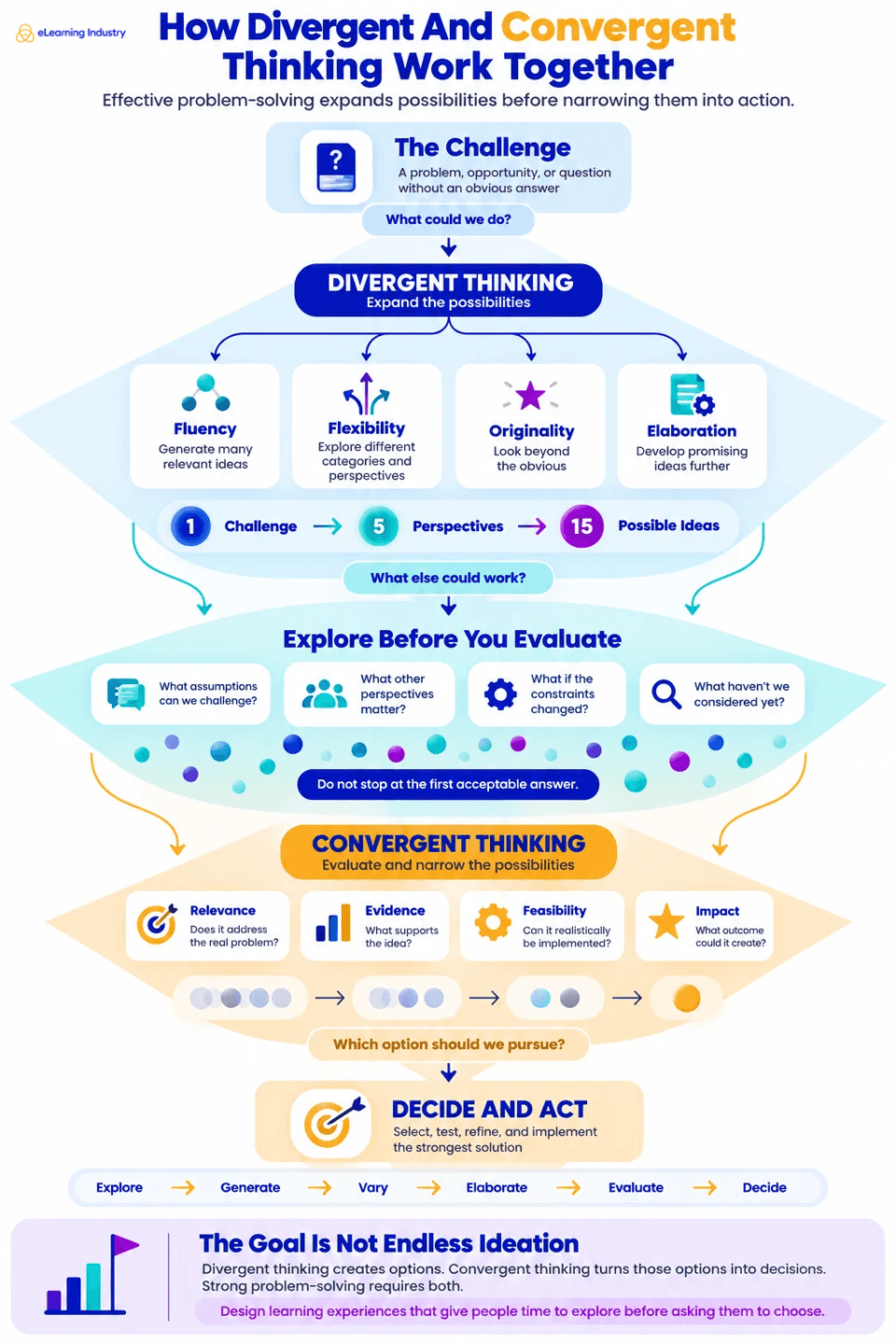
Divergent thinking helps generate many possible answers. In contrast, convergent thinking looks at the options and focuses on finding the best or most accurate solution. According to the APA, convergent thinking uses logical analysis to review solutions and choose the one most likely to work.
So, the difference between convergent and divergent thinking is not about which style is better. Instead, each serves a different purpose.
Divergent Thinking |
Convergent Thinking |
|
Goal |
Expand possibilities | Narrow possibilities |
Core question |
What could work? | Which option works best? |
Direction |
One problem → many possibilities | Many possibilities → fewer choices |
Primary emphasis |
Ideation and exploration | Analysis and selection |
Typical activity |
Generating alternatives | Evaluating alternatives |
Learning example |
Develop five possible responses | Select a response using defined criteria |
Divergent and convergent thinking usually work best when used one after the other. A team might start by generating many possible solutions. Then, they can use facts, limits, costs, risks, and company goals to narrow down their choices. If the team decides too soon, they might miss out on better options. But if they keep brainstorming without choosing, they may never make a decision.
In short, if you only brainstorm and never decide, you end up with ideas but no action. If you decide too soon without enough ideas, you might choose from too few options. That's why the best approach is to let both types of thinking play their own roles in the process.


You can adjust your cookie preferences here.