

Constructivism Learning Examples In Workplace And L&D—Infographic
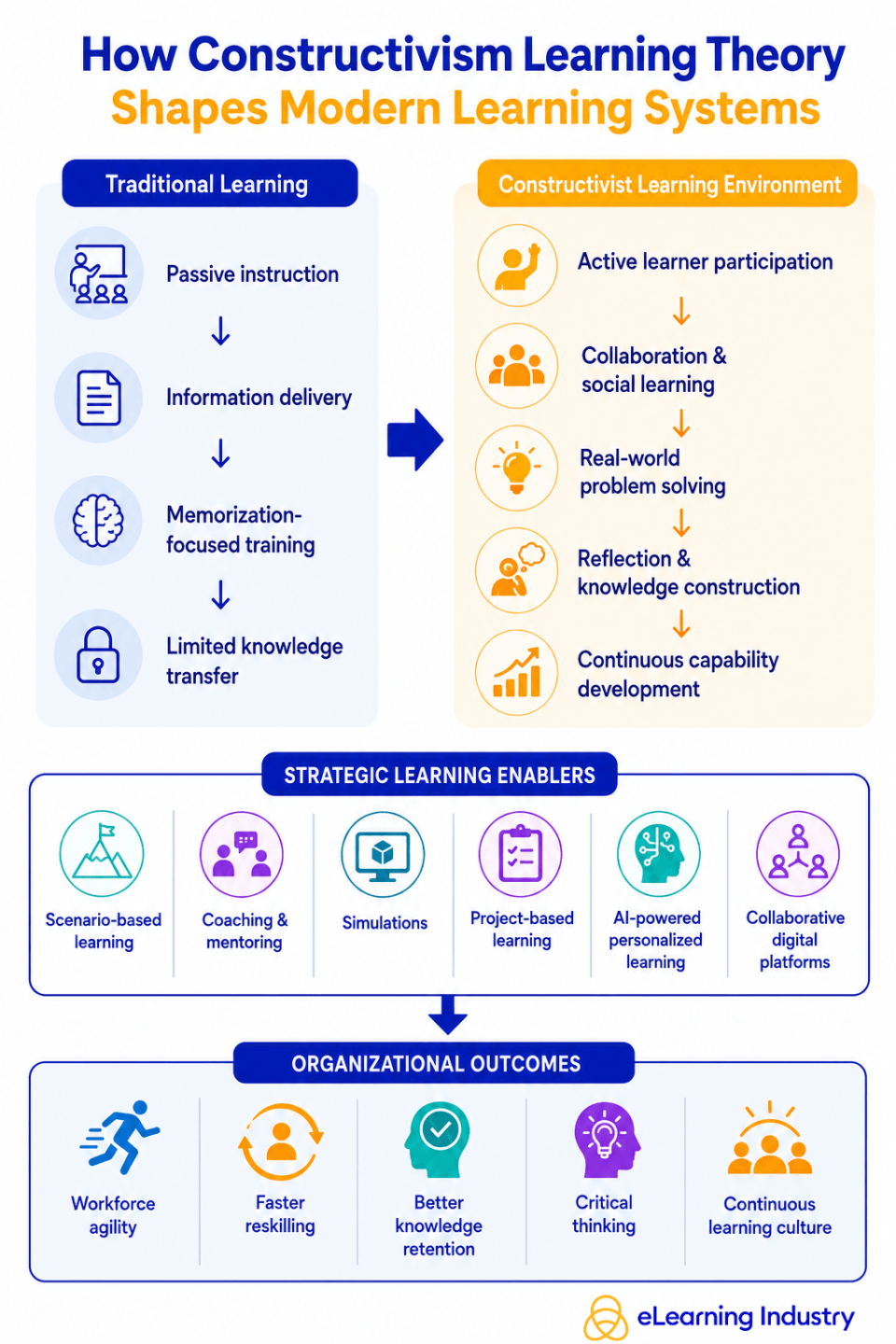
Constructivism learning theory is popular in today's workplace training because it encourages employees to learn by doing, reflecting, and getting involved, not just by listening. Instead of just taking in information, people learn by solving problems, working with others, and using ideas in real situations. This makes constructivism especially useful for organizations that want to build lasting skills and improve performance over time.
Scenario-Based Learning
One of the most common constructivism learning theory examples in corporate L&D is scenario-based learning. Employees face realistic situations that reflect actual workplace challenges, like handling customer complaints, managing conflict, or making leadership decisions. Instead of just memorizing steps, learners practice critical thinking and decision-making in real-world contexts. This leads to better engagement and helps people remember what they learn because it connects directly to their daily work.
Simulations And Role-Playing
Simulation and role-play training are also central to constructivism learning. For example, sales teams may participate in virtual client negotiations, and healthcare professionals use simulations to practice patient care decisions. These hands-on experiences let learners try out ideas, learn from mistakes in a safe setting, and think about what works. This helps employees build real confidence as well as a solid understanding of the concepts.
Project-Based Learning
In many companies, employees learn by working on real business projects instead of just finishing separate training modules. They collaborate across teams, do research, and experiment as part of learning. This approach matches the main idea of constructivism: people build knowledge through meaningful activities and working with others.
Collaborative Problem-Solving
Teams join forces to tackle tough challenges, share their views, and learn together. This method fits well with social constructivism, which says people learn best through discussion and teamwork. Coaching and mentoring also support this approach by encouraging reflection, guided practice, and regular feedback from experienced colleagues.
Modern LMSs
Instructional Designers are also using constructivism in digital learning platforms. Today's LMSs often have interactive simulations, discussion forums, branching scenarios, and group workspaces that get people involved. Rather than just showing information, these systems let learners explore, try things out, and use what they learn on their own.


You can adjust your cookie preferences here.