
Instructional Design Degree: Do You Need One In 2026?—Infographic
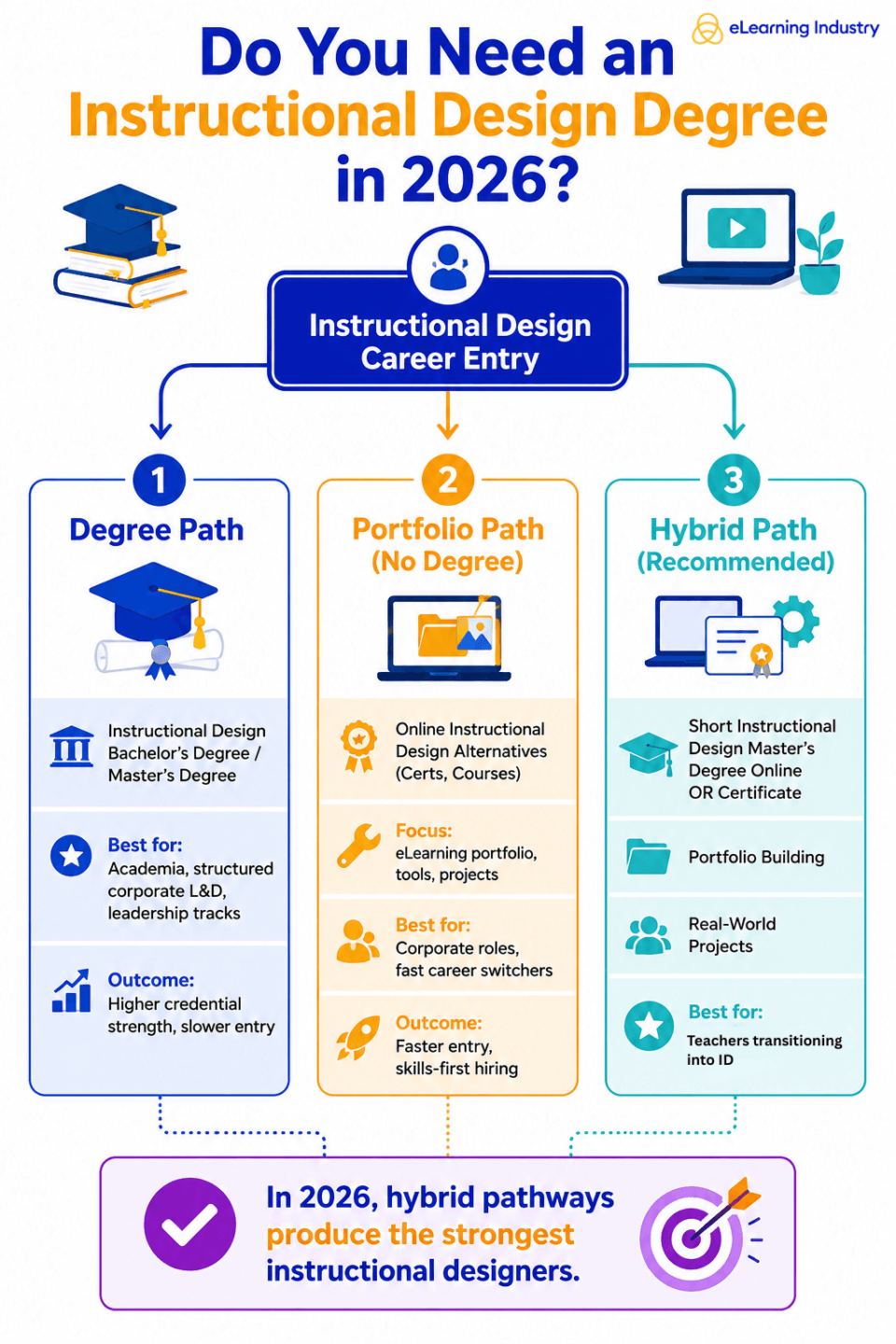
An Instructional Design degree can still open doors in 2026, but it is no longer the only path into the field. For teachers transitioning into Instructional Design, the answer depends on the type of role you want, the industry you plan to enter, and how quickly you want to make the move.
When A Degree Matters
A formal degree in Instructional Design is often valuable in structured environments with strict hiring requirements. Higher education institutions, government agencies, and large enterprise organizations may still prefer candidates with an instructional systems design degree or a background in Instructional Design and technology. The same applies to leadership-track L&D positions, where employers may seek advanced credentials, such as an online Instructional Design master's degree or other graduate-level qualifications. In these settings, a degree can strengthen credibility and support long-term career growth.
When A Degree May Not Be Necessary
In many corporate Instructional Design roles, hiring managers are shifting toward skills-first evaluation. Startups, agencies, and freelance clients often care more about what you can build than where you studied. A strong portfolio, practical experience, and familiarity with workplace learning challenges may matter more than completing a traditional online Instructional Design degree. This shift has made it easier for teachers to transition into ID by combining transferable classroom experience with targeted upskilling and portfolio development.
What Employers Value Most Today
Today's hiring landscape is more practical and performance-driven. Employers increasingly look for:
- A relevant degree or certification
- Portfolio quality and real project samples
- Storyboarding ability
- Articulate Storyline or Adobe Captivate skills
- Learning strategy knowledge
- Stakeholder communication
- AI-enhanced content development skills
- Business understanding and performance alignment
In many cases, the strongest candidates combine formal learning with hands-on experience, modern tools, and a clear understanding of how learning supports business goals.


You can adjust your cookie preferences here.