
5 Key Components Of Performance Management Training—Infographic
Effective performance management training helps managers consistently align, evaluate, and develop their team members. Specifically, L&D leaders should focus on creating practical and repeatable behaviors that boost performance over time, rather than relying on compliance-based evaluations. Let's make this clearer by breaking down effective performance management training programs.
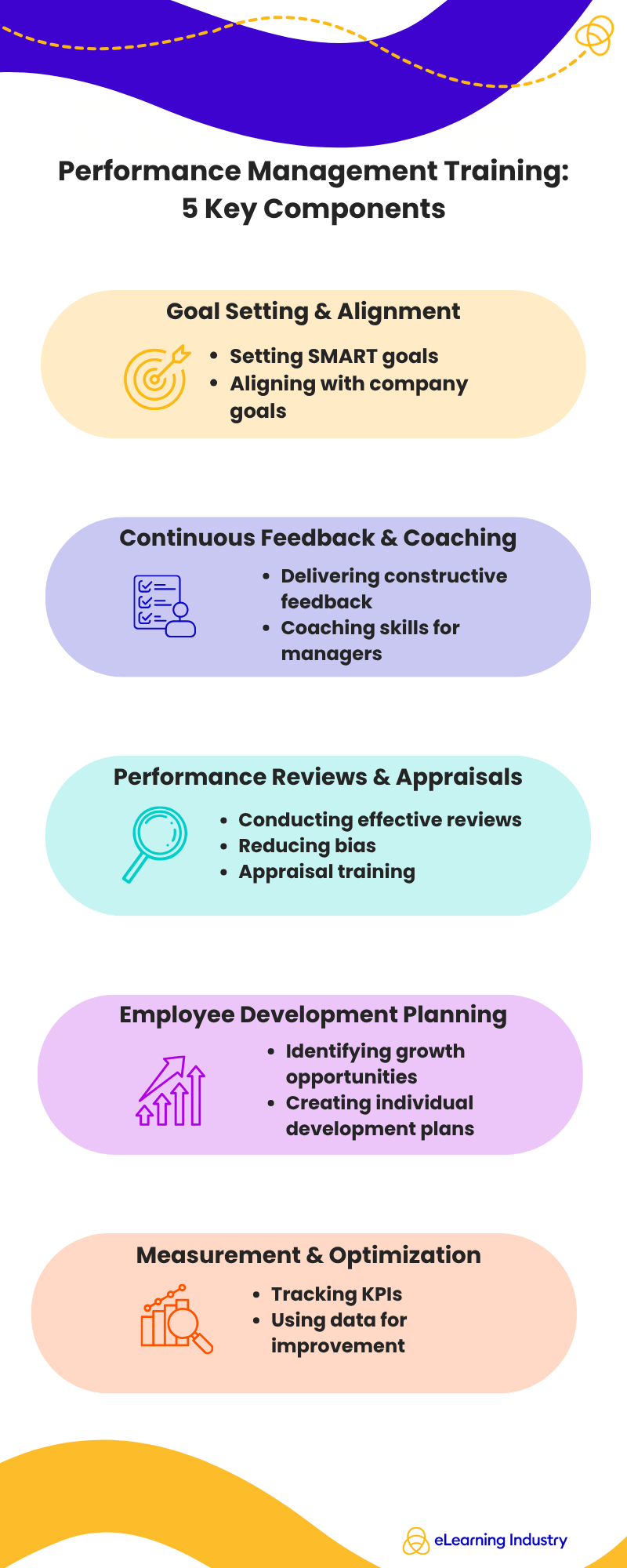
Goal-Setting And Alignment
Good performance training starts with clear goal-setting. This means managers need to translate business goals into individual objectives using tools such as OKRs and KPIs. This helps ensure that employees' work supports the organization's strategy. When everyone is aligned, there is less confusion, and performance can be measured from the start.
Continuous Feedback And Coaching
Modern performance management training focuses on ongoing feedback instead of yearly reviews. Managers should be ready to provide timely, helpful feedback and coach employees in real time. Many organizations find this challenging, not because they lack tools, but because they lack skills. Training should help managers feel confident in having performance discussions, addressing issues early, and encouraging positive behaviors. Over time, this builds a culture of continuous improvement instead of just reacting to problems.
Performance Reviews And Appraisals
While continuous feedback is critical, structured evaluations still play a key role. Performance review training helps managers conduct fair, consistent, and meaningful assessments. This includes defining evaluation criteria, documenting performance, and reducing bias in decision-making. When done well, performance reviews are part of ongoing conversations instead of just a one-time event.
Data-Driven Decision-Making
High-impact performance evaluation training should include data literacy. Managers need to know how to use metrics, dashboards, and performance indicators to make informed decisions, thus helping them conduct more accurate evaluations. Training must also show how to interpret data in context, ensuring that numbers support, not replace, a manager's judgment.
Employee Development Planning
Finally, effective performance training links evaluation to growth. Performance discussions should result in clear development plans that connect current performance with future potential. Managers need tools for that to identify skill gaps, set development goals, and track progress. This changes performance management from looking back at past performance to focusing on future improvement.


You can adjust your cookie preferences here.