
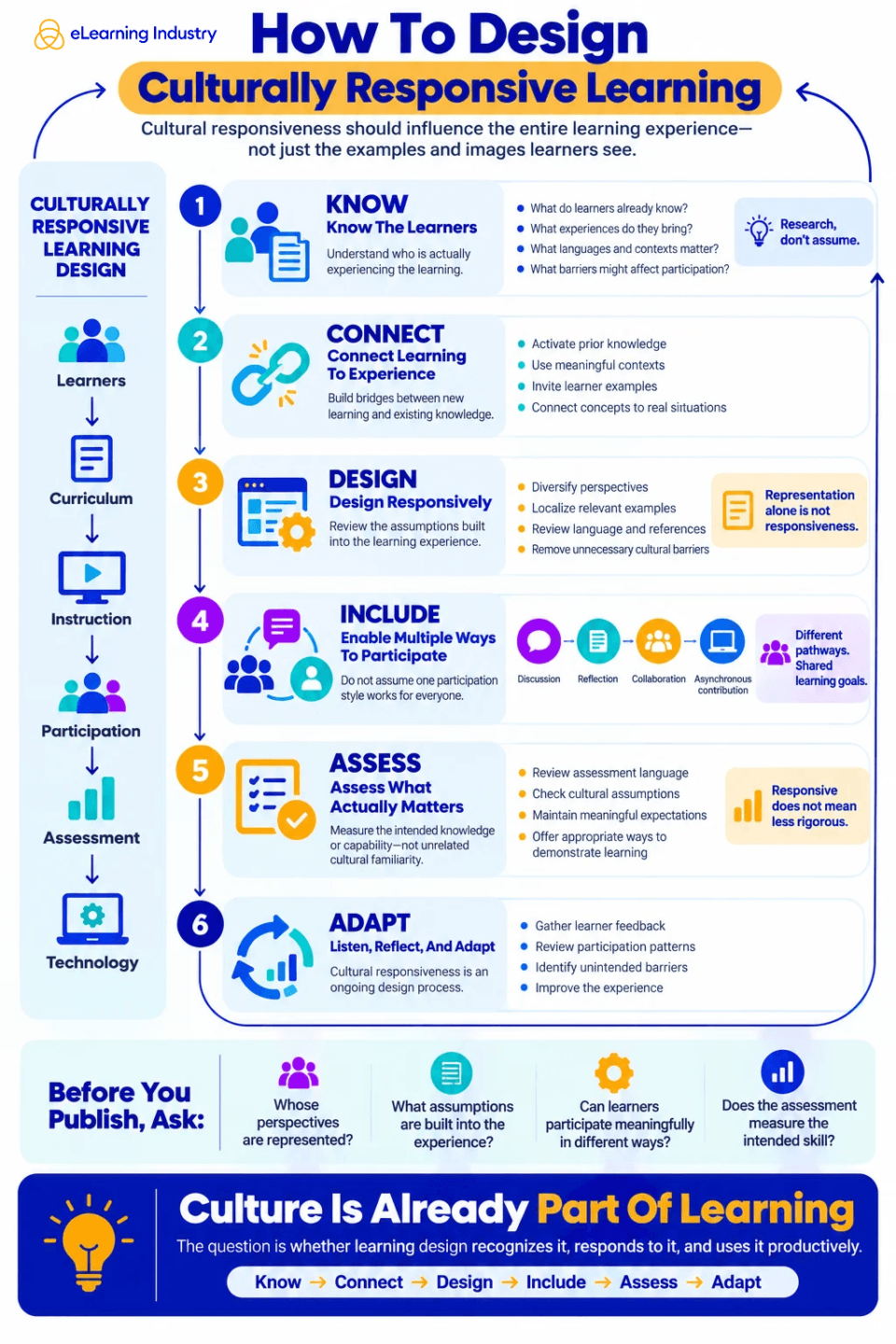
How To Design Culturally Responsive Learning—Infographic
Culturally responsive teaching matters even more in digital learning, since technology can quickly spread both strong design choices and mistakes.
Recent research shows that cultural responsiveness needs to be intentionally included in course design, assessment, and building digital communities. It does not automatically carry over from in-person teaching.
Content And Representation
When creating digital content, teams should consider which perspectives, voices, examples, and experiences are included. For example, a global sales course should avoid treating one country’s sales process, customer expectations, or workplace culture as if they apply everywhere.
Language And Localization
Culturally responsive teaching involves more than just translating content when learners come from different languages and regions. Elements such as idioms, humor, metaphors, case studies, examples, measurements, workplace habits, and references may need to be adapted. Using clear language also helps multilingual learners understand the content without making the ideas too simple.
Interaction Design
Culturally responsive teaching should shape how digital learning invites people to participate. Some learners do well in live discussions, while others prefer to share their thoughts in writing, in small groups, or through activities they can do on their own time. Offering different ways to participate makes the learning environment more flexible.
Technology And Access
Culturally responsive teaching in EdTech should also consider how and where people access learning. Access to devices, internet connection, bandwidth, accessibility, digital skills, and local technology can be very different for each learner. If a learning experience only works well with perfect technology, some people may be left out.
Assessment
Culturally responsive teaching also means that assessment designers should check if a task really measures the skill or knowledge they want to assess. If doing well on an assessment depends on knowing certain idioms, cultural references, or ways of communicating that are not part of the learning goal, the test might be measuring something extra.
Finally, personalization should avoid turning into stereotyping. AI systems and adaptive platforms should not infer someone’s learning preferences solely from their nationality, ethnicity, language, or other demographic details.


You can adjust your cookie preferences here.