
EEAT In SEO: Authority Framework—Infographic
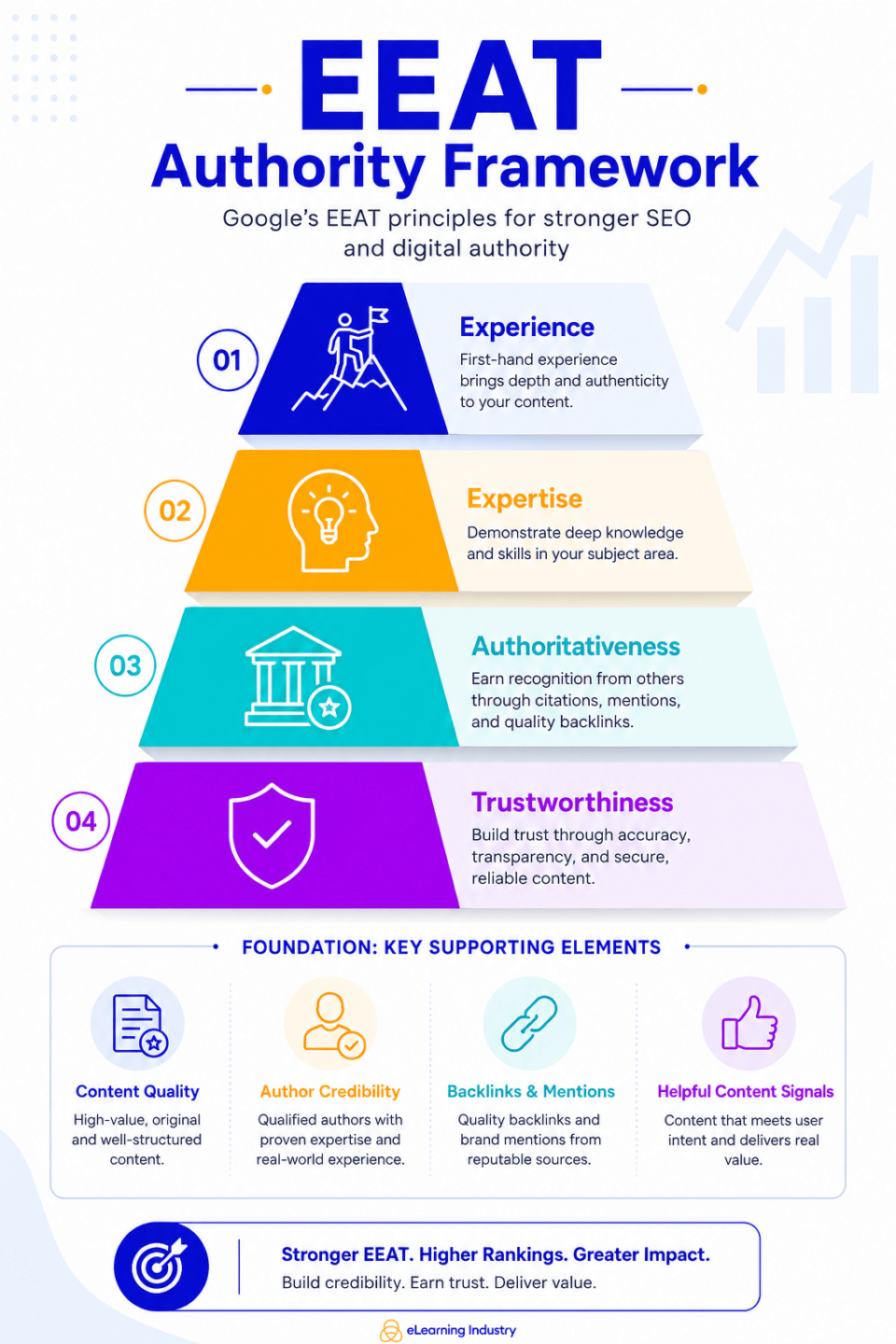
EEAT relies on a set of quality signals that help Google decide if content is trustworthy, useful, and should appear in search results. Many marketers search for a specific EEAT score, but Google does not provide a public rating. Instead, Google's systems look at different signals related to experience, expertise, authoritativeness, and trust.
Experience And Expertise
Experience signals show that content is based on real-world involvement or first-hand knowledge. Case studies, practical examples, lessons learned, and original insights prove the author has direct experience with the topic. Expertise signals highlight subject knowledge, professional credentials, and the skill to explain complex ideas clearly.
Authority
Authoritativeness grows over time. Google's EEAT systems check for citations, strong backlinks, industry recognition, and mentions from other trusted websites. These signals show that others see the source as credible and valuable.
Trust
Trust is often seen as the most important part of EEAT in SEO. Accurate information, clear sources, author details, and regular updates all help build trust. A good website keeps these standards across everything it publishes.
In the end, EEAT signals help Google find content that truly helps users. Organizations that follow clear content guidelines and share expert insights are more likely to build authority and do well in search results and AI-generated answers.


You can adjust your cookie preferences here.