
Anatomy Of A High-Performing Storytelling Podcast—Infographic
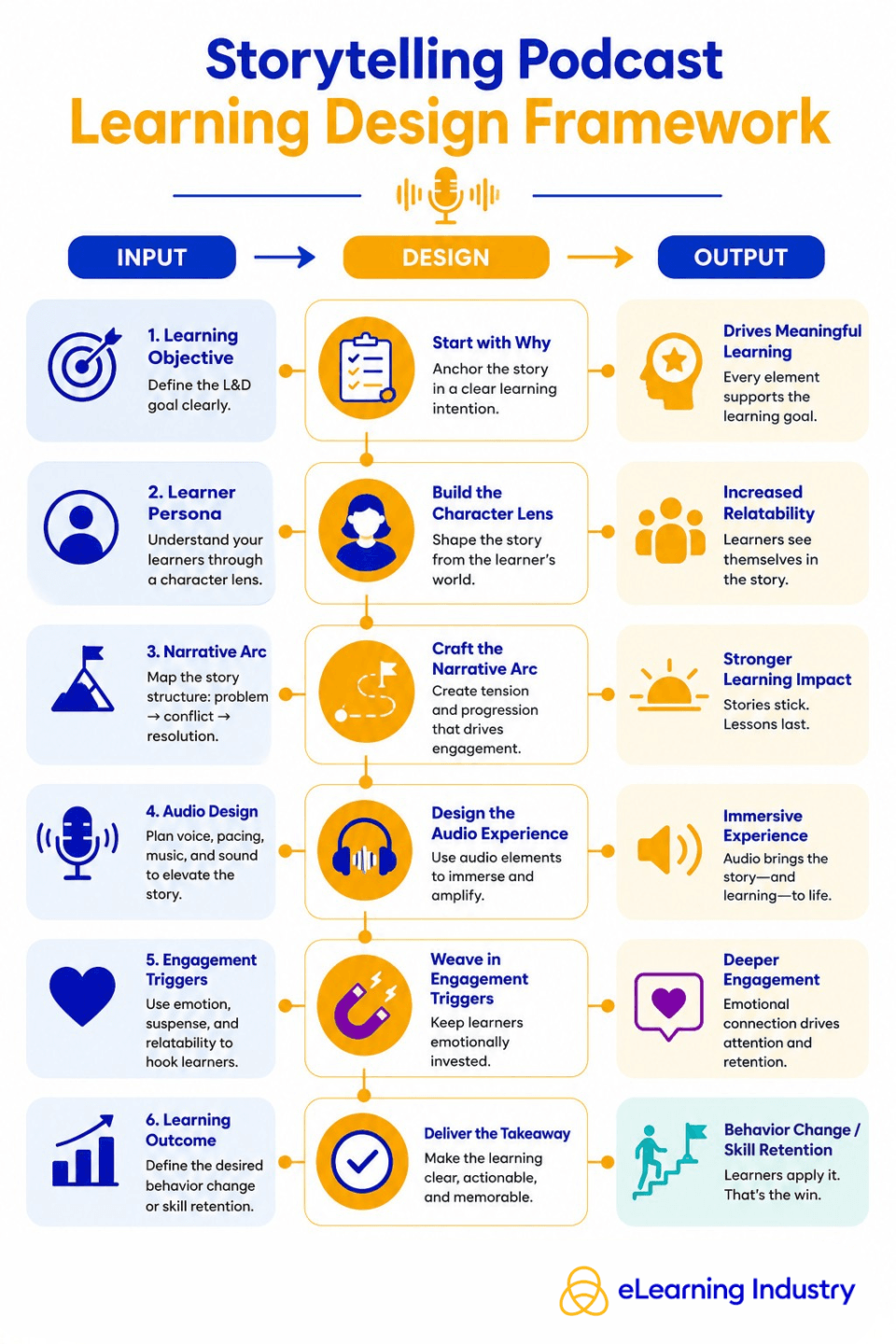
The best storytelling podcast formats succeed because they are built on a clear narrative architecture that mirrors how humans naturally process and retain information. Whether in entertainment or learning design, the most effective storytelling podcasts follow a consistent structural flow that transforms passive listening into active cognitive engagement.
Hook
At the core of a high-performing narrative podcast is the hook (attention capture). This opening moment determines whether the listener stays or drops off. In good storytelling podcasts, the hook is not just a question or statement, but introduces tension, curiosity, or emotional relevance within the first 30–60 seconds. For Instructional Designers, this often translates into presenting a relatable workplace dilemma or a surprising insight that signals value immediately.
Character
Next is the character or learner proxy, which acts as a relatable figure for listeners. This could be a protagonist or a composite learner reflecting the audience's experiences. By identifying with this character, listeners become more emotionally involved, which enhances retention.
Challenge
The conflict or challenge is what drives engagement. Without it, there is no narrative tension. Engaging storytelling techniques for podcasts emphasize clearly defined obstacles, such as decision-making pressure, skill gaps, or organizational challenges. This is where the learning problem is introduced, making the content more memorable than abstract instruction.
Resolution
In storytelling podcasts, this is where the character applies knowledge, overcomes a challenge, or reaches a meaningful insight. For Instructional Design use cases, this is where the learning objective is demonstrated in action rather than explained theoretically. It is what turns a simple story podcast into a performance-based learning tool.
Learning Takeaway
Finally, the reflection or learning takeaway reinforces meaning. Good storytelling podcasts, whether explicitly or implicitly, guide listeners to extract insight from the narrative. This is where podcast storytelling becomes instructional rather than purely entertaining. It connects experience to application, ensuring transfer of learning to real-world contexts.


You can adjust your cookie preferences here.