
How To Make A Training Module—Infographic
Understanding how to make a training module is essential for Instructional Designers and L&D professionals who want to create effective, scalable learning experiences. Below is a practical step-by-step guide that explains how to make a training module that supports both learning outcomes and organizational goals.
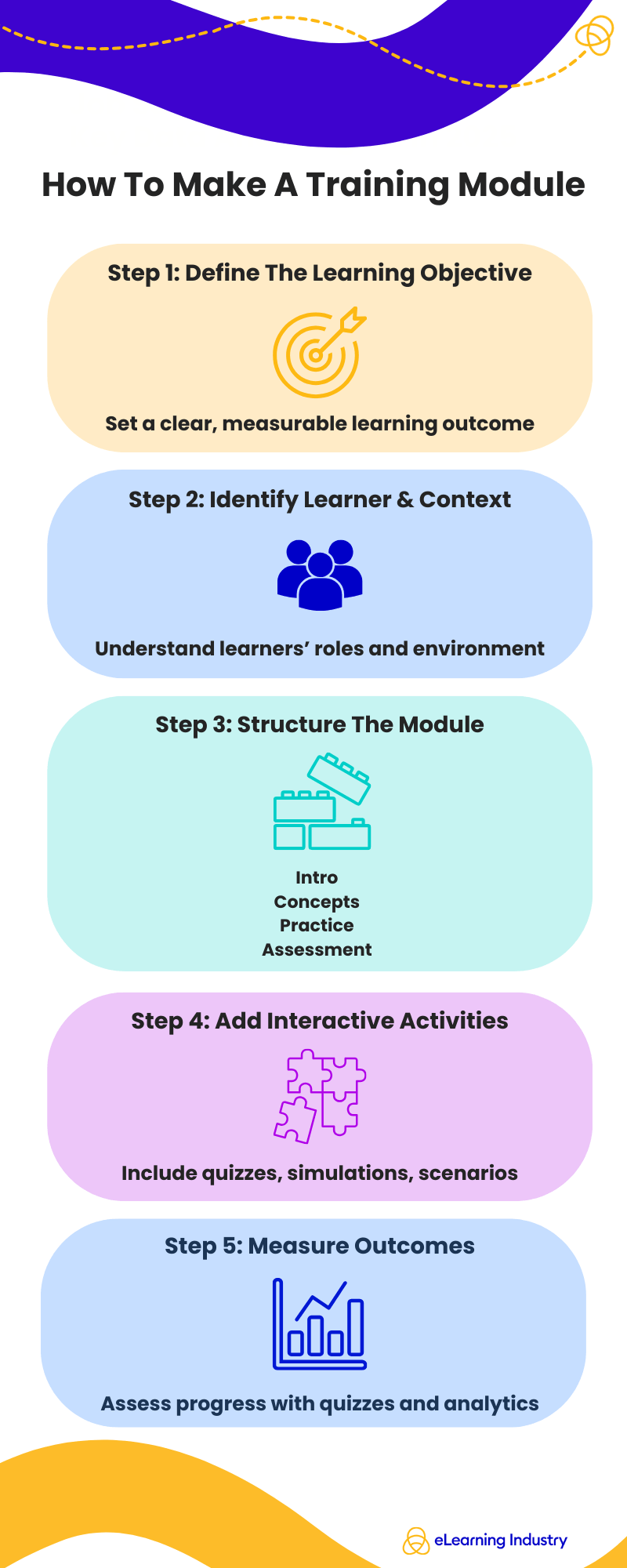
Step 1: Define The Learning Objective
Every effective training module begins with a clear learning objective. The objective defines what learners should be able to do after completing it. Without this clarity, content can easily become unfocused or overly broad. Good modules focus on one specific outcome rather than multiple loosely connected goals. This approach makes it easier to design relevant activities and assessments. For example:
- Bad objective:
"Understand customer service." - Better objective:
"Handle difficult customer conversations using the company escalation framework."
The second objective is clearer because it describes a specific skill and context. It also allows Instructional Designers to create realistic scenarios and measurable assessments.
Step 2: Identify The Learner And Context
The next step in learning how to make a training module is understanding who the learners are and where they will apply the knowledge. The learning content becomes more effective when it reflects the real environment in which employees work.
Key factors to consider include:
- Role: What responsibilities does the learner have?
- Skill level: Are they beginners, experienced employees, or managers?
- Work environment: Do they work remotely, in an office, or in the field?
- Learning constraints: How much time can they realistically spend on training?
When Instructional Designers align modules with the learner's context, the content becomes more relevant and easier to apply on the job.
Step 3: Structure The Module
Once the objective and learner profile are clear, the module needs a logical structure. A consistent structure helps learners follow the content more easily and ensures that key elements of the learning process are included.
A typical structure includes:
- Introduction: It explains why the topic matters.
- Concept explanation: It introduces key ideas or frameworks.
- Demonstration: It shows how the skill works in practice.
- Practice activity: It allows learners to apply what they learned.
- Knowledge check: It verifies understanding.
- Summary: It reinforces key takeaways.
This structure supports both knowledge acquisition and skill development, which is essential for the learning experience.
Step 4: Design Interactive Learning Activities
Interactivity is important because it moves learners from passive reading to active participation. Interactive training modules can include activities such as:
- Simulations that mirror workplace situations.
- Scenario-based decisions where learners choose how to respond.
- Knowledge checks that reinforce key concepts.
- Reflection prompts that encourage learners to connect training with their daily work.
These activities help learners practice decision-making and apply knowledge in realistic contexts. For many organizations, interactive design is what transforms basic content into meaningful modules.
Step 5: Measure Learning Outcomes
The final step in learning how to make a training module is measuring whether the learning objective was achieved. Assessment helps organizations determine if training is effective and where improvements are needed. Common evaluation methods include:
- Quizzes to test knowledge retention.
- Performance tasks that demonstrate skill application.
- Completion metrics that track engagement.
- LMS analytics that provide deeper insights into learner behavior.
When modules include clear evaluation methods, L&D teams can continuously refine their learning programs and improve future training design.


You can adjust your cookie preferences here.